
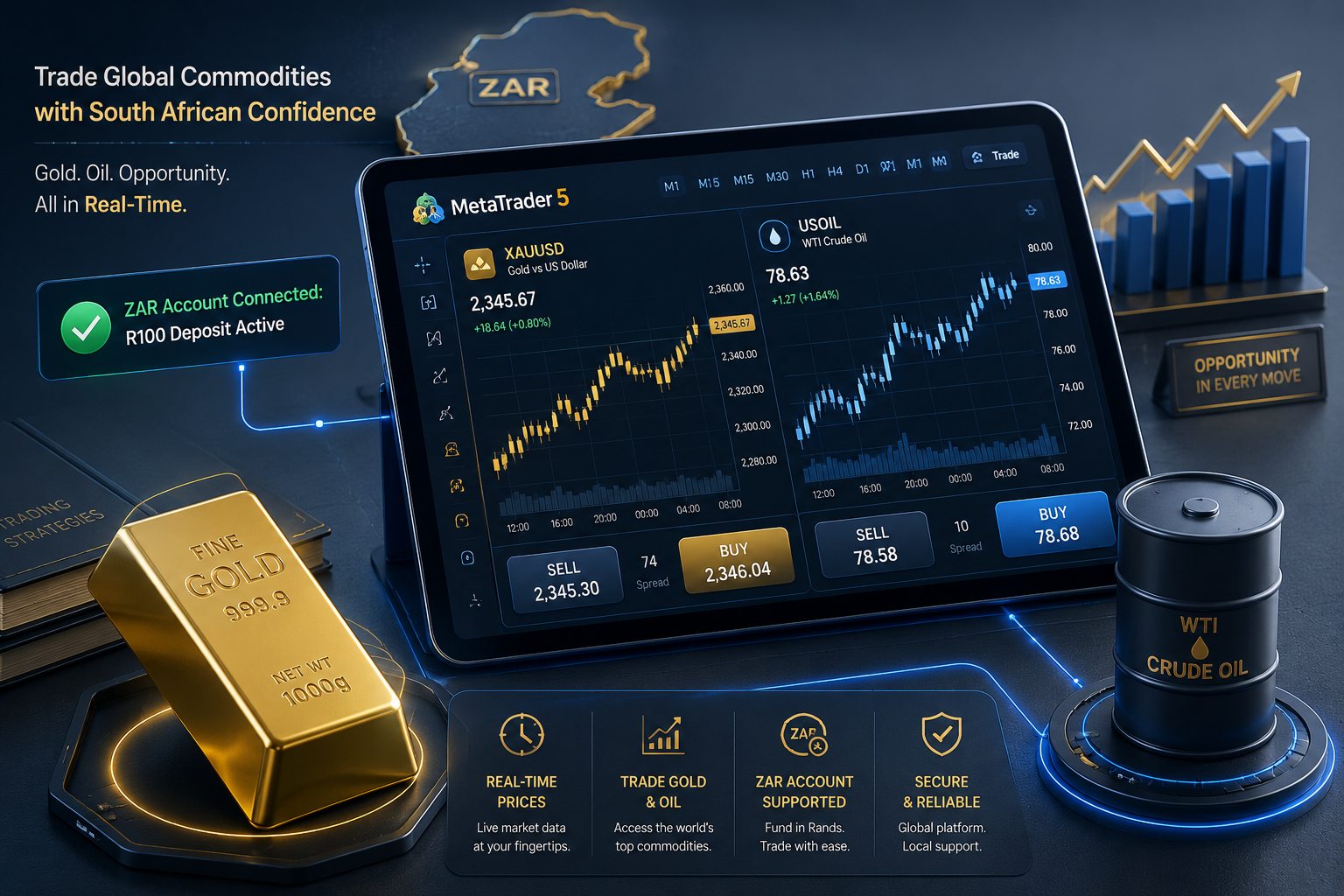
Gold, oil, silver, wheat. These are words most South Africans hear regularly, whether in a business news segment or a conversation about petrol prices going up again. But hearing about commodities and actually understanding how does commodity trading work are two very different things. A lot of traders in this country know instinctively that these markets exist and that money moves through them, but the moment you try to figure out how to actually participate, the information gets either too technical or too vague to be useful. JP Markets has built an environment where South African traders can access commodity markets practically, without needing a finance degree to get started. This guide breaks it down the way it should be explained.
What Is Commodity Trading and Why Do Prices Move the Way They Do
Before anything else, what is commodity trading in plain terms? It is the process of taking positions on the price of raw physical goods. These goods fall into two categories. Hard commodities come from mining or extraction, things like gold, silver, platinum, and crude oil. Soft commodities come from agriculture, covering wheat, maize, coffee, and similar products.
For anyone involved in commodity trading in South Africa, this has a local dimension that makes it more relevant than it might seem for traders elsewhere. South Africa’s economy is deeply connected to commodity output. Gold and platinum mining sit at the core of the national economic story.
Most retail traders access commodities through Contracts for Difference, which are commonly called CFDs. A CFD lets you open a position on price movement without ever owning the physical asset. You are not buying a barrel of oil or a gram of gold. You are taking a position on whether the price goes up or down from your entry point. When you close the position, the difference between where you entered and where you exited determines your outcome. Commodity trading platforms that operate on a CFD model give ordinary traders access to these markets without the storage, logistics, or exchange membership that physical commodity trading historically required.
Why JP Markets Works for Commodity Traders in South Africa
JP Markets offers commodity CFDs through MetaTrader 5, covering gold, silver, and oil as core instruments. The pricing reflects live international market conditions, and the platform gives traders the full MT5 toolkit including multi-timeframe charting, technical indicators, and economic calendar access.
What separates JP Markets from other south africa brokers offering similar instruments is the local grounding behind the platform. Accounts are ZAR-denominated, which removes the currency conversion friction that offshore brokers quietly build into the deposit and withdrawal process. Deposits start from R100, there are no processing fees charged by JP Markets on transactions through supported gateways, and withdrawals are processed within 24 to 48 business hours through local payment infrastructure.
For traders trying to understand how does commodity trading work before going anywhere near a live account, the JP Markets demo account runs on live market prices using virtual funds. It is not a simulation running on delayed data. It is the actual market, just without real money on the line until the trader is ready. That distinction matters more than most beginners realise when they are first building confidence.
JP Markets vs Other Commodity Trading Platforms
| Feature | JP Markets | Exness | AvaTrade | FBS | Pepperstone |
| Commodity CFDs | Yes | Yes | Yes | Yes | Yes |
| ZAR Account Support | Yes | Partial | No | No | No |
| South Africa-Based Office | Yes | No | No | No | No |
| Minimum Deposit | R100 | $1 | $100 | $1 | $200 |
| Local Payment Methods | Yes | Limited | Limited | Limited | Limited |
| MT5 Platform | Yes | Yes | Yes | Yes | Yes |
| In-Person Branch Support | Yes | No | No | No | No |
| Withdrawal Processing | 24 to 48 hours | Varies | 1 to 3 days | 1 to 3 days | 1 to 3 days |
| Free Education Hub | Yes | Basic | Basic | Basic | Basic |
How Different Types of Traders Are Using Commodity Access Through JP Markets
A trader in Johannesburg who has spent years paying attention to gold prices because of how closely they track the South African mining sector decides to stop watching and start participating. Rather than buying mining company shares and carrying the company-specific risks that come with them, they open a gold CFD position through JP Markets and trade the commodity price directly.
A university student in Durban notices that petrol price announcements create market conversations every month. She opens a JP Markets demo account and starts tracking crude oil CFDs on the MT5 platform to understand how does commodity trading work in practice before making any real financial decisions. The demo environment runs on live prices, so the education is grounded in what is actually happening.
A trader who has previously used offshore south africa brokers for commodity positions and grown frustrated with slow withdrawals and dollar-conversion friction switches to JP Markets specifically for the ZAR account and the 24 to 48 hour withdrawal timeline. The commodity instruments are the same. The experience around them is noticeably different.
Conclusion
Once the basics are clear, how does commodity trading work stops being an intimidating question and becomes a practical starting point. Gold responds to dollar strength and global uncertainty. Oil moves on supply decisions and demand cycles. Silver tracks both industrial use and precious metal sentiment. Each of these markets is accessible to South African traders through JP Markets without needing a large deposit, without currency conversion eating into your balance, and without the kind of offshore support structure that leaves you waiting days for a response when something needs fixing. Commodity trading in South Africa through JP Markets means the infrastructure around your trading, the payments, the platform, the support, is as solid as the access to the markets themselves.
Frequently Asked Questions
1. What does commodity trading mean to someone who has never done it before?
Using a broker’s platform, you buy/sell a commodity (gold or oil) by entering into a CFD position. You choose whether you believe the price will increase or decrease, and when you exit at a later point, the result is based on the difference between your entry and exit prices. You can practise trading commodities using live prices with a demo account through JP Markets.
2. How is commodity trading different from Forex trading?
With both being formed using a CFD position, their price movements will respond differently to the economic factors that drive them. For example, commodity prices will tend to fluctuate because of physical supply chains, weather, politics, and the demand for that commodity from industry. In comparison, currency movement is driven mainly by interest rates, economic data, and central bank policies.
3. What are the trading platforms offered through JP Markets for trading commodities?
JP Markets operates within an automated environment called MetaTrader 5, which can be accessed via a desktop application or browser; however, if you’re on a mobile device (Apple or Android), there is also an app for trading. All commodity CFDs are also traded from the same online trading account used for trading Forex and index instruments.